Your sales team has mastered Salesforce. They’ve built sophisticated pipelines, automated lead nurturing, and can forecast revenue with precision. But when that $50,000 executive coaching contract closes, the "Technical Debt" of general-purpose software becomes visible.
Suddenly, the workflow breaks down: operations teams are manually duplicating client records across siloed tools, and coaches are left managing sensitive data in disjointed spreadsheets and SharePoint folders. This disconnect does more than drain administrative time; it creates a "Reporting Black Hole" when a CHRO demands a real-time update on their leadership development program.
To eliminate this friction, elite firms are moving away from manual workarounds and adopting the Best All-in-One Platform with integrated CRM. By unifying the sales-to-delivery handoff, you ensure that the moment a deal is "Closed-Won," the operational engine from client portals to session tracking triggers automatically, turning administrative burden into a competitive advantage.
Salesforce and HubSpot excel at managing deals, tracking prospects, and automating marketing campaigns. But they weren’t designed for the specialized workflows that executive coaching requires:
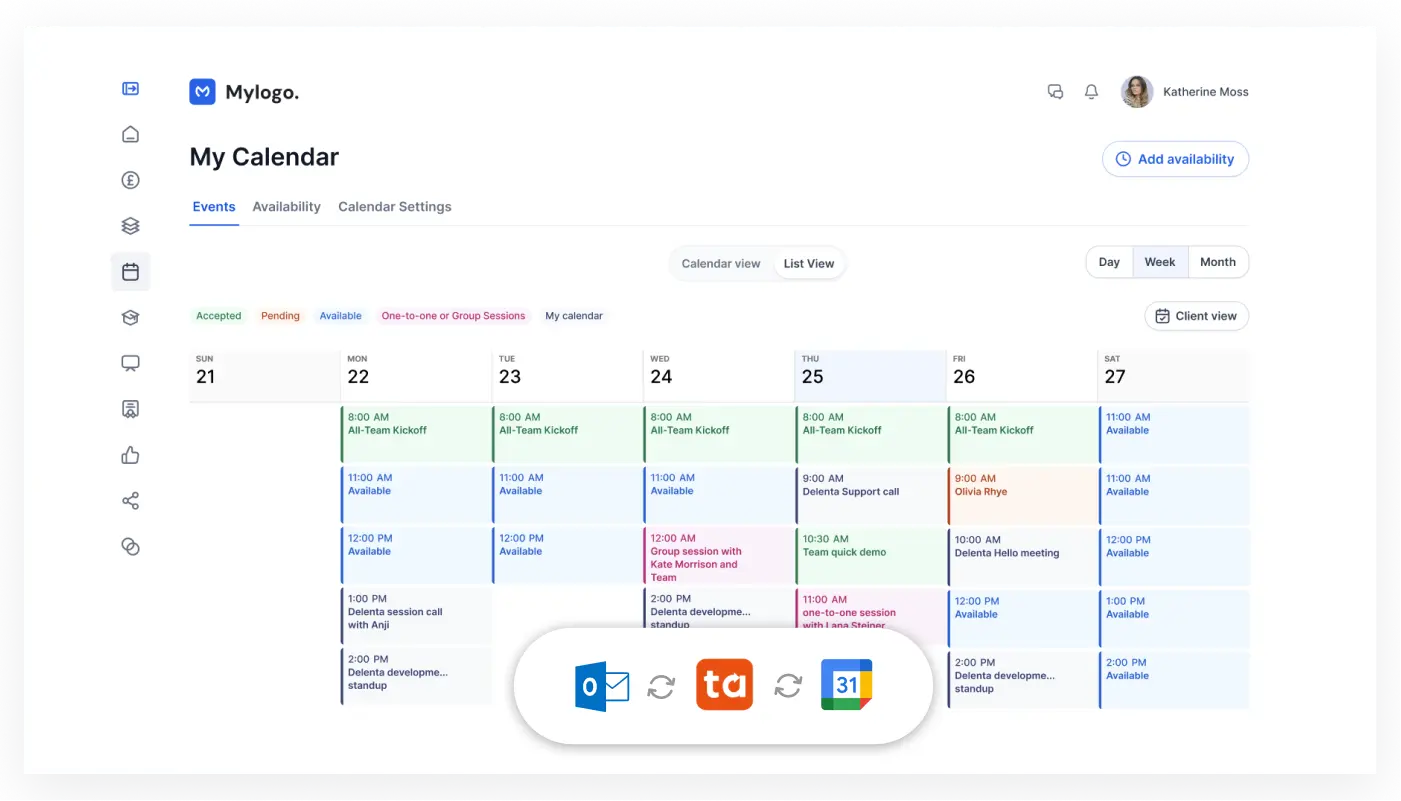


Many coaching firms try to force-fit these workflows into their existing CRM, creating clunky workarounds that frustrate both coaches and clients. Others maintain completely separate systems, losing the strategic intelligence that could inform account management and revenue expansion.
The most successful executive coaching firms are taking a hybrid approach: maintaining their CRM investment for sales operations while using specialized coaching platforms for delivery with smart integration that bridges both systems.
Here’s how this strategic integration transforms common pain points:
Eliminating “Fire Drill” Reporting Requests
The Problem: When a C-suite executive asks for an immediate update on their organization’s coaching program utilization, someone has to manually pull data from multiple systems, creating urgent busywork that pulls team members away from client service.
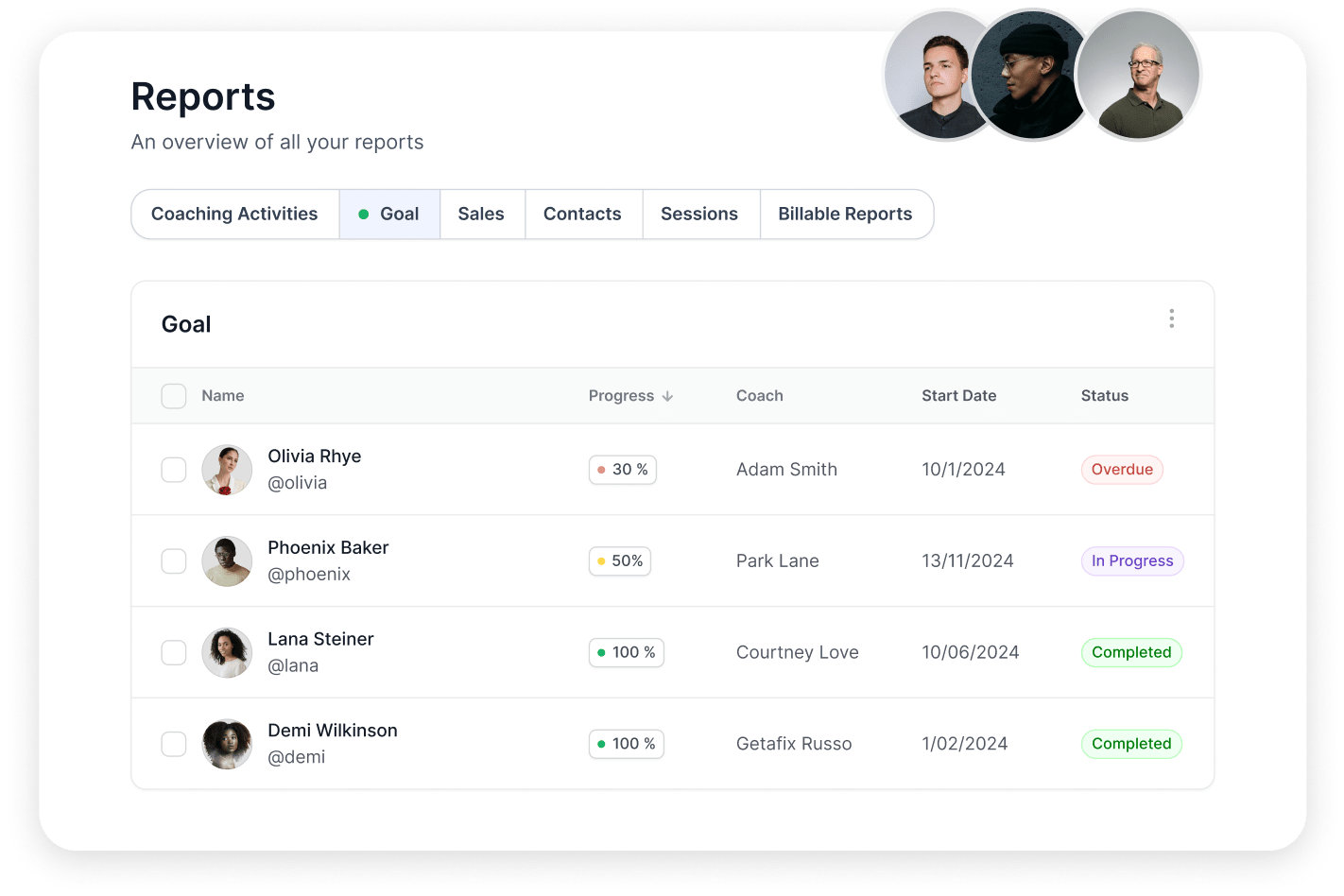
The Solution: Real-time coaching metrics flow automatically into CRM custom fields. Session completion rates, engagement scores, and program milestones update continuously, making ad-hoc executive requests a simple dashboard view rather than a data collection emergency.
Identifying Revenue Expansion Automatically
The Problem: Account managers miss upsell opportunities because they can’t see coaching engagement patterns. High-performing executives who complete all sessions quickly might be ideal candidates for expanded programs, but this insight is trapped in delivery systems.
The Solution: Integration algorithms identify expansion signals automatically. When executives consistently book sessions ahead of schedule or provide high engagement scores, the CRM creates expansion opportunities and alerts account managers to strike while momentum is strong.
Streamlining Stakeholder Relationships
The Problem: CHROs and talent development leaders need both quarterly strategic reports and real-time access to program metrics. Creating these dual reporting streams manually consumes significant operations bandwidth.
The Solution: Branded client portals provide real-time self-service access for day-to-day metrics, while automated reports compile strategic insights for quarterly business reviews. Account managers focus on relationship building rather than data compilation.
Consider a typical enterprise coaching engagement: A Fortune 500 company contracts for executive coaching across 15 senior leaders, with each executive receiving 6 sessions over 4 months.
Stage 1: Seamless Transition from Sale to Service
When the Salesforce opportunity reaches “Closed-Won,” automation triggers immediately:
Your sales team maintains momentum without manual handoffs.
Stage 2: Continuous Intelligence During Delivery
As coaching sessions progress over 4 months, key metrics flow back to Salesforce:
Account managers see coaching success in real-time alongside traditional CRM data.
Stage 3: Data-Driven Expansion Conversations
After 3 months, the integration reveals that C-suite executives have 95% session completion rates while middle managers average only 60%. This insight automatically generates:
Revenue growth becomes strategic rather than opportunistic.
Many coaching firms try to force-fit these workflows into their existing CRM, creating clunky workarounds that frustrate both coaches and clients. To see how specialized platforms compare against industry giants, read our deep dive into the 10 best CRMs for coaches in 2026. Understanding these technical trade-offs is essential for firms looking to scale without increasing their administrative headcount
Modern integration platforms make sophisticated workflows accessible without extensive technical resources:
Setup Time: 2-4 weeks including workflow mapping and testing Technical Requirements: Basic Zapier configuration knowledge Ongoing Maintenance: Minimal - automations run continuously once configured Customization Options: Extensive - tailor data flows to match your specific business processes
Most coaching organizations complete implementation with existing staff, adding consultative support only for advanced automation scenarios.
A common concern among coaching firms is maintaining client confidentiality while providing business intelligence. Strategic integration addresses this by:
The result: CHROs get the program visibility they need, coaches maintain confidential relationships, and sales teams receive actionable intelligence for account management.
Once core integration is operational, coaching firms often expand into sophisticated revenue intelligence:
Predictive Renewal Modeling
Historical completion rates, engagement scores, and milestone achievement create predictive models for contract renewal likelihood. Account managers receive early warning alerts for at-risk accounts and confirmation signals for expansion-ready clients.
Coach Performance Analytics
Understanding which coaches generate the highest client satisfaction and completion rates informs both internal development and client matching. This intelligence flows back to sales teams when proposing coach assignments for new engagements.
Market Intelligence Aggregation
Anonymous program data across multiple client organizations reveals industry benchmarks and emerging development needs. Sales teams use these insights to position new programs and develop thought leadership content.
For executive coaching firms evaluating their technology stack, the choice isn’t between CRM or coaching platform it’s between silos or integration.
Your sales team has invested hundreds of hours mastering Salesforce or HubSpot. That expertise shouldn’t be abandoned. Simultaneously, your coaching team deserves purpose-built tools designed for their specialized workflows.
Strategic integration preserves both investments while creating unified intelligence that drives sustainable growth. Account managers gain coaching insights that inform expansion strategies. Operations teams eliminate manual data collection. Coaches focus on client development rather than administrative burden.
The result is a technology ecosystem where each component excels at its intended purpose while contributing to comprehensive business intelligence exactly what growing coaching organizations need to scale without losing the personal service that built their reputation.
Ready to see how Delenta integrates with your CRM?
Schedule a personalized demo where we'll map your specific workflows and show exactly how coaching insights can flow into your existing sales infrastructure, creating the unified operations platform your growing coaching business needs.


